How to Become a Delay Analyst — Skills, Certifications and Experience
Forensic delay analysis sits where planning meets the law, and the money is large. Here's the path from planner to credible delay analyst — the methods, the skills, the proof.
By Dr. Hassan Eliwa, PhD — Founder of PMMilestone.org & PMMilestone.com · 2026-06-22
How to Become a Delay Analyst — Skills, Certifications and Experience
By Dr. Hassan Eliwa, PhD — Founder of PMMilestone.org & PMMilestone.com · Updated 2026-06-22 · https://pmmilestone.com/career-guides/how-to-become-a-delay-analyst
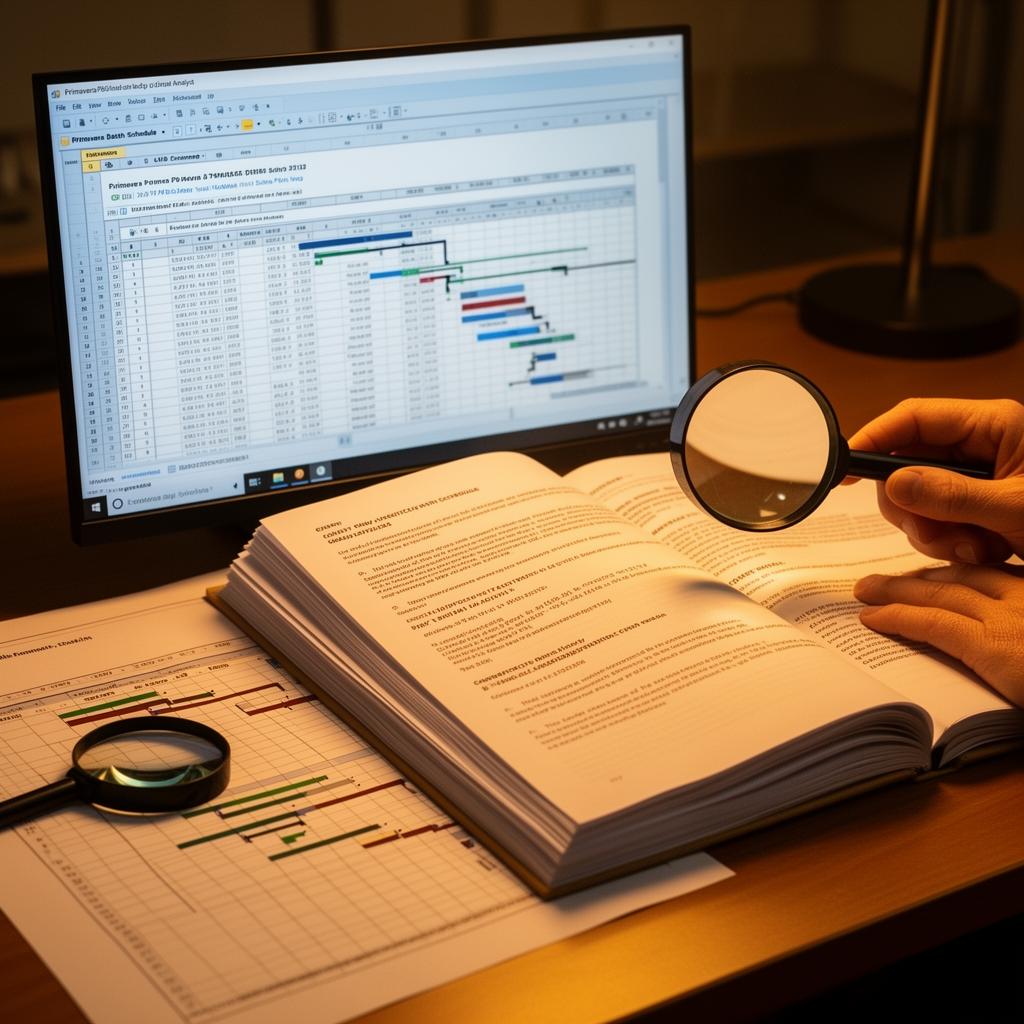
Most planners spend their careers trying to stop projects from running late. A delay analyst spends theirs explaining, after the fact, exactly why a project ran late, who was responsible, and how much time and money that responsibility is worth. It is one of the most specialised and best-paid corners of project controls, and it sits at an unusual intersection: part scheduling expert, part detective, part expert witness. When a dispute over a major project reaches the tens of millions, the delay analyst's report is often the single document that decides who pays.
That is why the role is demanding and the bar is high. A delay analysis that is technically sloppy, methodologically inconsistent, or visibly partisan gets torn apart by the other side's expert — and a torn-apart analysis can lose a winnable claim. This article maps how to get there from a planning background: the recognised methods you must master, the skills that separate a credible analyst from a planner with opinions, the certifications worth holding, and the experience that earns you a seat at the table.
🔍 What a delay analyst actually does
Strip away the jargon and the job is this: prove, to an evidentiary standard, that a specific event caused a specific amount of delay to the project's completion — and that the responsibility for that event sits with one party rather than another. The output is usually a formal delay report that will be scrutinised by opposing experts, lawyers, and possibly an adjudicator, arbitrator or court. Everything about how you work is shaped by that scrutiny.
Crucially, a delay analyst must be able to demonstrate cause and effect, not merely correlation. It is not enough to show that the project finished late and that the client issued some late information along the way. You must show that this specific late information delayed this specific critical activity, which in turn pushed out the completion date by a demonstrable number of days. That chain — event to critical path to completion — is the whole discipline. The Delay Analysis and Critical Path Method entries unpack the underlying logic in more depth.
🧰 The methods you must master
There is no single 'correct' method of delay analysis; there are several recognised techniques, each with strengths, weaknesses, data requirements and appropriate use cases. A credible analyst knows all of them, can justify why they chose the one they used, and understands the criticisms the other side will level at it. The SCL Delay and Disruption Protocol is essential reading here. The four you must understand deeply are below.
| Method | How it works | Best when… | Main weakness |
|---|---|---|---|
| Time Impact Analysis (TIA) | Insert delay events into the schedule at the point they occurred; measure the push | You have a good baseline and contemporaneous updates | Prospective; sensitive to schedule quality |
| As-Planned vs As-Built | Compare the planned programme directly against what actually happened | Records are good but the schedule logic is weak | Doesn't isolate causation on its own |
| Windows / Time-Slice | Divide the project into periods; analyse delay within each window | Long projects with multiple, shifting delays | Data-hungry; labour-intensive |
| Collapsed As-Built | Remove delay events from the as-built to model what would have happened | Strong as-built records, weak baseline | 'But-for' logic is contestable |
The four core delay-analysis methods. Knowing which to use, and why, is itself a senior skill.
FIELD NOTE — Why method choice is a battleground. In a real dispute, the choice of method is rarely neutral — different methods can produce materially different answers from the same facts, which is exactly why the opposing expert will attack your choice before they attack your numbers. The credible analyst selects the method that best fits the available records, documents why, and is honest about its limits. An analyst who picks the method that gives the biggest number, rather than the one the evidence supports, is an analyst who loses under cross-examination.
💪 The skills that separate credible analysts
A delay analyst needs everything a senior planner has — and then a second, distinct layer on top. The planning skills are necessary but nowhere near sufficient. What actually makes an analyst credible when their work is challenged is the combination below.
- Forensic rigour. Every conclusion traced to evidence; no gaps an opposing expert can exploit.
- Contract and entitlement literacy. Understanding extension-of-time clauses, notice requirements, and concurrency — delay analysis lives inside contract law.
- Records discipline. Knowing what contemporaneous evidence exists, what it proves, and where the gaps are.
- Clear written argument. A report a non-technical adjudicator can follow and believe. Brilliance nobody can follow is worthless.
- Independence and objectivity. Even when engaged by one party, the credible analyst's opinion must be defensible, not partisan.
🔀 Planner vs delay analyst — the gap to close
If you are a senior planner, you already hold one axis of this role — the scheduling depth. The gap to close is forensic method, contract and claims literacy, evidence discipline, written advocacy, and the hard-won posture of independence. None of these are bolt-ons; they are a second profession layered onto the first, and most planners underestimate how long the second profession takes to build.
🎓 Certifications and qualifications worth holding
Delay analysis is a field where credibility is currency, and the right credentials signal it. None are strictly mandatory, but in a discipline where your authority can be challenged, they help establish that you know the recognised methods and standards.
| Credential / knowledge | Why it matters for delay analysis |
|---|---|
| AACE PSP | Demonstrates planning & scheduling rigour — the foundation |
| AACE CFCC | Forensic schedule / claims focus — directly relevant |
| SCL Delay & Disruption Protocol | The industry reference for method and good practice |
| Primavera P6 mastery | The tool most forensic analysis is performed in |
| Contract knowledge (FIDIC, NEC, etc.) | Delay sits inside the contract — you must read it fluently |
Credibility is assembled from method, tool, and contract literacy — not from any single certificate.
🛠️ How to build the experience
You cannot shortcut your way into delay analysis; you build toward it. The most natural route is through senior planning on projects that actually experience disputes — because the best education in delay analysis is maintaining the records and schedules that later become the evidence. Volunteer for the extension-of-time submissions on your project. Work alongside the commercial team when a claim is being prepared. Get exposure to how a real delay argument is constructed and, ideally, how it is attacked.
COMMON MISTAKE — Treating delay analysis as a schedule exercise. The commonest error planners make moving into this field is treating it as pure scheduling — running the numbers, producing the impacted programme, and stopping there. But a delay analysis with no command of the contract, no grasp of notice and concurrency, and no evidence trail is a technical artefact that collapses the moment it meets a lawyer. Delay analysis is a legal-technical discipline. The schedule is half of it; the contract and the evidence are the other half. Master all three or you remain a planner who builds impacted schedules for someone else to argue.
⚖️ The expert-witness dimension
As you become senior, delay analysis increasingly leads toward the role of expert witness — the person who signs a report and may have to defend it under oath. This changes how you work in a profound way: every opinion you express has to be one you can stand behind when a skilled barrister is trying to dismantle it. The independence requirement becomes absolute. An expert's first duty is to the tribunal, not to the party paying the fee, and an analyst who forgets that — who shades the analysis toward their client — is an analyst whose credibility, once broken, never recovers.
Even if you never enter a witness box, working as if you might makes you a better analyst. It forces you to ask, of every conclusion: would this survive a hostile, expert cross-examination? That discipline — anticipating the attack and closing the gap before it is found — is what elevates a competent analysis into a winning one. The best delay analysts I have known build their reports backwards from the cross-examination they imagine facing.
EXPERT TIP — Build the report your opponent would attack. Before you finalise any delay analysis, spend an hour as the opposing expert. Where is your weakest link? Which assumption is least supported by the records? Which method criticism applies to your choice? Then strengthen or honestly caveat each one. The analyst who finds their own weaknesses first controls the argument; the one who waits for the other side to find them is always on the defensive.
Frequently Asked Questions
Do I need a law degree to become a delay analyst?
No — most delay analysts come from planning or engineering, not law. But you must become genuinely fluent in construction contracts (FIDIC, NEC and others), in extension-of-time mechanisms, and in concepts like concurrency and notice. You work alongside lawyers; you do not need to be one, but you must speak their language.Which delay analysis method is the 'best' one?
There is no universally best method — the right choice depends on the quality of the available records and the nature of the delays. A credible analyst selects the method the evidence supports, documents why, and is honest about its limitations. Choosing a method because it produces a bigger number is the fastest way to lose credibility.What's the difference between delay and disruption?
Delay concerns lateness — events that push out the completion date. Disruption concerns loss of productivity — work taking more resource or time than it should, without necessarily delaying completion. They are analysed differently and often appear together in claims. The SCL Protocol covers both.What certifications should I prioritise?
Start with the AACE PSP for scheduling rigour, study the SCL Delay and Disruption Protocol thoroughly, and consider the AACE CFCC for forensic/claims focus. Deep Primavera P6 skill is assumed. Contract knowledge — however you acquire it — is essential alongside these.How do I get my first delay analysis work?
Through senior planning on dispute-prone projects, by volunteering for extension-of-time submissions, and by working with the commercial team on live claims. Many analysts also move into specialist claims consultancies, which is where much forensic work is concentrated.Will AI replace delay analysts?
AI will accelerate the mechanical parts — assembling as-built records, running schedule comparisons, flagging anomalies. It will not replace the judgement about causation, the command of the contract, or the credibility of a human expert whose report must withstand cross-examination. The analysts who use AI to handle the data and focus on argument will be the ones in demand.
People also ask
Follow-up questions practitioners search for next — each one points to the calculator, template or reference entry that answers it.
Which schedule tool will an interviewer expect me to know?
Runs the DCMA 14-point assessment against P6 / MS Project exports. Schedule Health Checker ↗
Where do I look up the terms in this guide?
Single-line definitions for 1,200+ project-management and controls terms. PM Glossary on PMMilestone.org ↗
Which books deepen this career path?
Field handbooks on project controls, P6 scheduling and EVM. Books & Publications ↗
Which academy track maps to this career step?
Structured progression from planner to programme controls director. Project Controls Academy ↗