How to Build a Career in Mega Project Controls
Mega projects are a different sport — the schedules, interfaces and stakes scale beyond anything on a normal job. Here's how to break in, what changes, and how to thrive at scale.
By Dr. Hassan Eliwa, PhD — Founder of PMMilestone.org & PMMilestone.com · 2026-06-22
How to Build a Career in Mega Project Controls
By Dr. Hassan Eliwa, PhD — Founder of PMMilestone.org & PMMilestone.com · Updated 2026-06-22 · https://pmmilestone.com/career-guides/how-to-build-a-career-in-mega-project-controls
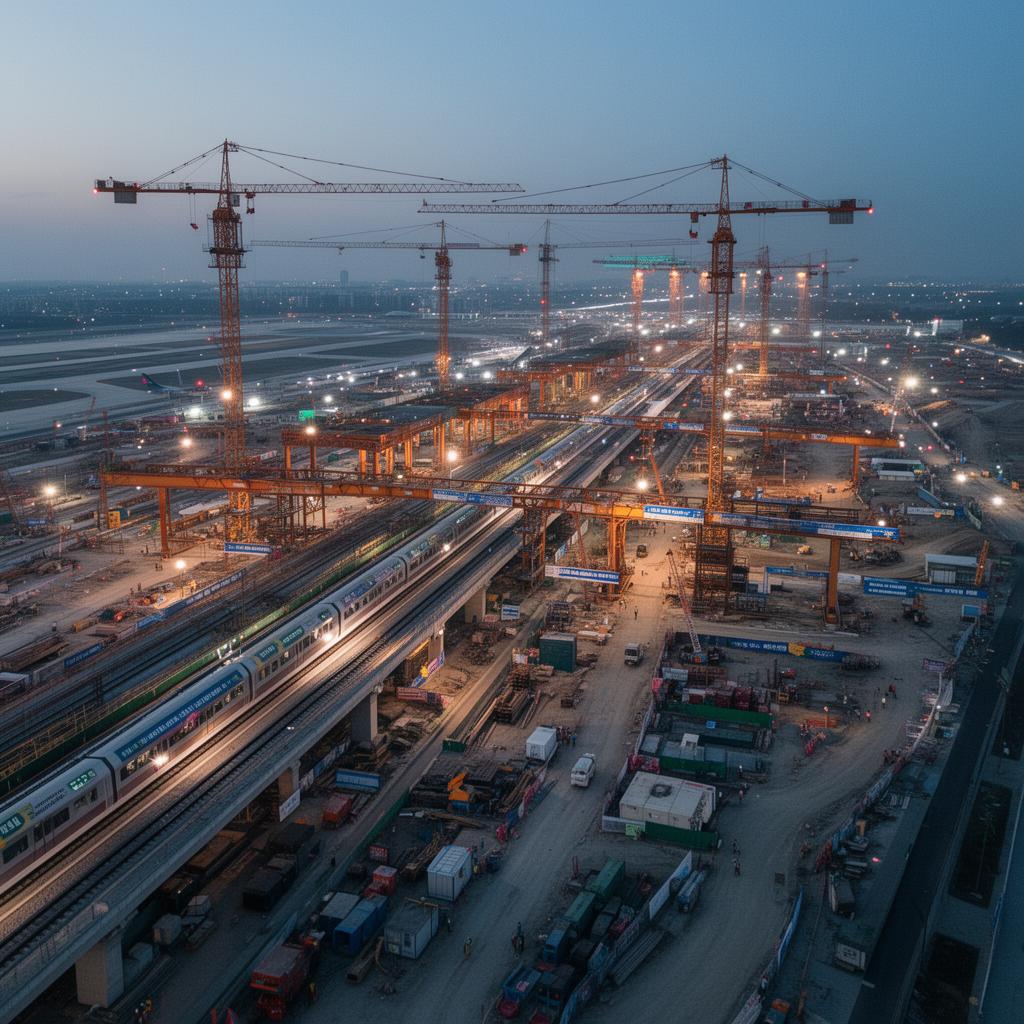
There is a category of project — the new metro line, the multi-billion process plant, the airport expansion, the offshore wind programme — where the ordinary rules of project controls do not so much change as multiply. A 'big' building project might have a 3,000-activity schedule and a handful of subcontractors. A mega project can have a hundred thousand activities across dozens of interlinked schedules, scores of contractors, multiple joint-venture partners, a client organisation the size of a company, and a level of public and political scrutiny that makes every reported number a potential headline. Controls on these projects is, frankly, a different sport.
It is also where some of the most rewarding and best-paid controls careers are built — because the skills that let you stay calm and effective in that complexity are rare, and once you have proven them on one mega project, you are in demand for the next. This article is about how to build that career: how to break in, what genuinely changes when you scale up, and the capabilities that separate people who thrive on mega projects from those who quietly drown.
📈 What actually changes at mega scale
The difference between a normal project and a mega project is not just 'more of the same.' Several things change in kind, not merely in degree, and understanding which is the first step to working effectively at scale.
| Dimension | Normal project | Mega project |
|---|---|---|
| Schedule structure | One schedule, maybe a few levels | A hierarchy of integrated schedules across packages |
| Interfaces | A handful, managed informally | Hundreds, managed by a formal interface system |
| Contractors | A main contractor and subs | Multiple primes, JV partners, a tiered supply chain |
| Reporting | One report to one client | Multi-tier reporting to JV boards, client, government |
| Risk | A risk register | Quantitative cost and schedule risk modelling |
| Scrutiny | Internal and client | Public, political, audited, sometimes televised |
Read down the right-hand column: each item is a different discipline, not a bigger version of the left.
🔗 Interface management — the skill that defines mega controls
If there is one capability that separates mega-project controls from everything else, it is interface management. On a normal job, the seams between disciplines can be held together by people talking to each other. On a mega project, with dozens of contractors each running their own schedule, the seams have to be managed as a formal system — every interface identified, owned, dated, and tracked — because the project does not fail in the middle of any one contractor's scope. It fails at the boundaries between them.
FIELD NOTE — Where mega projects really go wrong. I have reviewed troubled mega projects where every individual contractor's schedule was perfectly healthy, and the programme as a whole was a year late. The delay lived entirely in the interfaces — the civils contractor finished a structure six weeks after the systems contractor needed it, because nobody owned that single handover date across two separate organisations. On a mega project, the controls professional who masters interfaces is worth more than the one who masters any single schedule. That is where the leverage is.
⚙️ Systems integration over personal heroics
On a small job, a brilliant individual can hold the controls together through sheer effort. On a mega project, that is impossible — the data volume defeats any individual. What works instead is systems integration: making P6, the cost system (SAP, Cobra), the risk tools and the Power BI reporting layer function as a single, coherent machine, so that a thousand people's inputs roll up into one trustworthy picture. The mega-project controls professional thinks like a systems architect as much as a planner. The Earned Value Management entry covers the cost/time integration that sits at the heart of this machine.
🎯 What mega projects demand that normal ones don't
- Interface management at scale — a formal system, not informal coordination.
- Multi-tier reporting — the same truth re-expressed for the site, the JV board, the client, and government, each at the right altitude.
- Formal schedule risk analysis — Monte Carlo on integrated schedules to set credible contingency.
- Systems integration — P6, cost, risk and BI as one machine, not four silos.
- Heavy governance and assurance — independent reviews, stage gates, and audit trails that withstand public scrutiny.
🚪 How to break into mega projects
The honest truth is that the first mega project is the hardest to get onto, because everyone wants experienced mega-project people and you cannot get the experience without the project. The way through is to be willing to start a rung lower to get on one. A planner role on a single package of a mega project teaches you more about scale, interfaces and integration in a year than five years on small works — and once you have it on your CV, the next mega project becomes far easier to join.
EXPERT TIP — Trade title for exposure on your first mega project. If you get the chance to join a mega project even a level below your current seniority, take it. The exposure is worth more than the title. You will learn interface systems, integrated schedule hierarchies, multi-tier reporting and formal risk analysis — capabilities that simply do not exist on smaller jobs. One mega project on your record changes the trajectory of your whole career, because it moves you into a market where the projects are scarce and the experienced people scarcer.
🚧 Common mistakes on the step up to mega scale
| # | The mistake | What to do instead |
|---|---|---|
| 1 | Trying to hold it together by personal effort | Think in systems; build integration, not heroics |
| 2 | Managing interfaces informally | Treat interfaces as a formal, owned, tracked system |
| 3 | Reporting one view to everyone | Tailor multi-tier reporting to each stakeholder's altitude |
| 4 | Skipping formal risk analysis | Run quantitative schedule and cost risk; set real contingency |
| 5 | Waiting for the 'right level' to join | Take the first mega project even a rung lower |
The recurring theme: scale defeats individual effort. Systems, formality and interfaces are how you win.
📓 A mega-project lesson I keep returning to
Early in my exposure to large programmes, I watched a multi-billion project where the controls function was technically excellent — sophisticated schedules, a proper risk model, polished dashboards — and yet leadership repeatedly lost confidence in the reporting. The problem was not the numbers; it was that the same metric meant different things to different audiences, so the JV board, the client and the site were effectively reading three different projects from one data set. Every meeting started with an argument about whose numbers were right before any decision could be made.
The fix was not more sophistication — it was alignment. We rebuilt the reporting around a single source of truth and a clear multi-tier structure: one set of underlying data, re-expressed at the right altitude for each audience, with the linkage between the levels made explicit. The technical work barely changed; the impact was transformational, because for the first time everyone was arguing about the decision rather than about the data. That is the lesson I keep returning to: at mega scale, the value of controls is not in the cleverness of the analysis but in the trust and alignment it creates across a vast, fragmented organisation.
FIELD NOTE — Sophistication is not the goal — trusted alignment is. It is tempting on a mega project to compete on technical sophistication — the most detailed risk model, the most elaborate dashboard. But a mega-project controls function succeeds or fails on whether thousands of people across dozens of organisations are working from one trusted picture. The best mega-project controls professionals are integrators and communicators first, and technicians second.
EXPERT TIP — On a mega project, master one interface map cold. If you want to stand out quickly on your first mega project, become the undisputed owner of one critical interface boundary — the handover between two major contractors, say. Know every date, every dependency, every risk on that seam better than anyone alive. It is a contained, masterable scope that sits exactly where mega projects fail, so excelling at it gets you noticed fast. The fastest reputations on mega projects are built at the interfaces, not in the middle of a scope where the work is easier and the credit is shared.
Frequently Asked Questions
What counts as a 'mega project'?
There's no fixed line, but mega projects are typically defined by very large value (often billions), high complexity, many contractors and stakeholders, long durations, and significant public or strategic importance — think major rail, airports, large energy and process facilities. What matters for your career is the complexity and exposure, not a precise dollar threshold.Do I need different qualifications for mega-project controls?
The core credentials are the same (PMI-SP, AACE PSP and so on), but mega projects place a premium on schedule risk analysis, interface management and systems integration. Skills in Monte Carlo risk tools and strong reporting/BI capability are particularly valued, and governance literacy matters more than on smaller jobs.Is it harder to stand out on a huge team?
It can feel that way, but the opposite is often true: mega projects expose you to capabilities that don't exist elsewhere, and excelling at interface management or systems integration marks you out quickly. The key is to own a clearly valuable slice and become the person others rely on for it.Will I get pigeonholed working only on mega projects?
If anything, mega-project experience broadens your options — it's a strong signal of capability and tends to open doors to senior controls and programme roles. The main risk is the opposite: once you've worked at this scale, smaller projects can feel limiting.How do I move from normal projects to mega projects?
Target contractors, JVs and clients that deliver major programmes, and be willing to join even a level below your current seniority to get on your first one. The exposure to scale, interfaces and integration is worth more than the title, and it makes the next move far easier.How is AI affecting mega-project controls?
AI is especially powerful at mega scale, where data volume overwhelms manual effort — automating progress aggregation, interface tracking, anomaly detection and draft reporting across vast schedules. This raises the value of the human work it can't do: interface judgement, risk interpretation, governance and stakeholder communication. Mega-project controls professionals who deploy AI across the machine will have a decisive edge.
People also ask
Follow-up questions practitioners search for next — each one points to the calculator, template or reference entry that answers it.
Which academy track maps to this career step?
Structured progression from planner to programme controls director. Project Controls Academy ↗
Which calculator should I learn first?
PV / EV / AC / CV / SV / CPI / SPI in one workbook — the gateway tool. EVM Calculator ↗
Which schedule tool will an interviewer expect me to know?
Runs the DCMA 14-point assessment against P6 / MS Project exports. Schedule Health Checker ↗
Where do I look up the terms in this guide?
Single-line definitions for 1,200+ project-management and controls terms. PM Glossary on PMMilestone.org ↗