How to Transition from Site Engineer to Planning Engineer
Your years on site are not something to leave behind — they are the single biggest advantage you will carry into planning. Here's how to make the move in 18 months.
By Dr. Hassan Eliwa, PhD — Founder of PMMilestone.org & PMMilestone.com · 2026-06-05
How to Transition from Site Engineer to Planning Engineer
By Dr. Hassan Eliwa, PhD — Founder of PMMilestone.org & PMMilestone.com · Updated 2026-06-05 · https://pmmilestone.com/career-guides/how-to-transition-site-engineer-to-planning-engineer
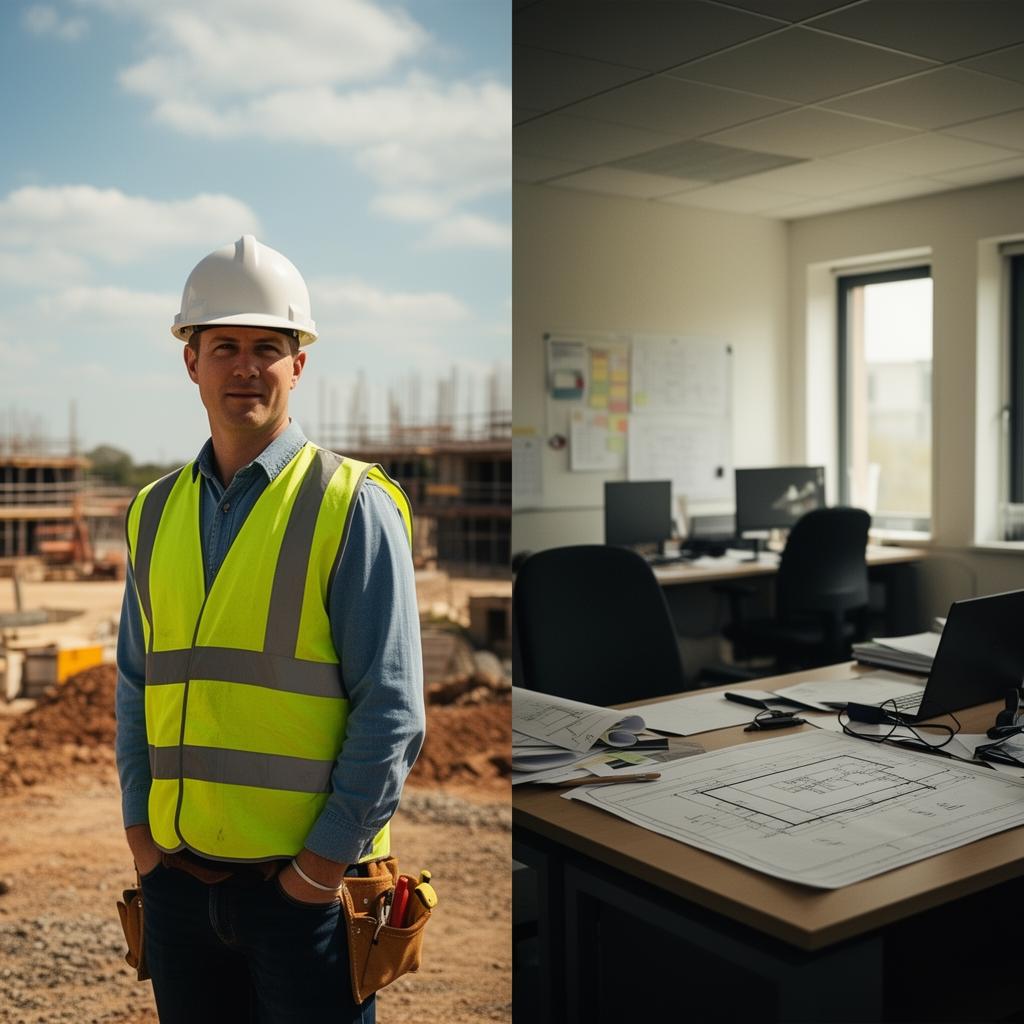
Every planning team has two kinds of people in it. The first learned to plan from the office outward — they are fluent in Primavera P6, they build elegant logic networks, and they sometimes produce schedules that are mathematically perfect and physically impossible. The second came up through site — they have stood in the mud watching a pour go wrong, and when they look at a four-week activity their gut tells them whether it is real. If you are a site engineer thinking about moving into planning, understand this clearly: you are about to become the second kind, and it is the more valuable kind.
🏗️ Why site engineers make excellent planners
The thing that takes office-trained planners years to develop — a feel for whether a sequence is buildable — you already have. You know that you cannot start blockwork until the slab has cured, that the crane can only be in one place at a time, and that 'we'll catch up in the dry season' is usually a lie. That instinct is gold, because the most expensive scheduling errors are not arithmetic errors; they are sequence errors that only someone who has built the work can smell.
| Skill from site | Value rating in planning |
|---|---|
| Spotting unrealistic durations | 10/10 |
| Knowing real build sequences | 10/10 |
| Productivity instincts | 9/10 |
| Subcontractor coordination | 8/10 |
| Reading drawings fast | 8/10 |
| Site reporting discipline | 7/10 |
The two highest-value transfers — build-sequence knowledge and spotting unrealistic durations — are exactly what office-trained planners lack.
🏗️ The gap you need to close
| What you bring (site) | What you must add (planning) |
|---|---|
| Build-sequence instinct | Expressing it as P6 logic and relationships |
| Sense of realistic durations | Critical path and total-float analysis |
| Daily progress awareness | Formal progress measurement and S-curves |
| Coordinating subbies on the ground | Modelling interfaces in the schedule |
| Site reporting | Baseline management and variance reporting |
Learn P6 the right way
Do not learn Primavera P6 as a button-clicking exercise. Learn it by rebuilding a schedule for a job you have actually worked on. Take a building you helped construct, open P6, and build its programme from memory and the drawings. Because you know how it really went, you will immediately see when the software lets you draw something that could never happen — and that tension is where real understanding lives.
✅ Prove it on the job — before you have the title
The single most effective move is to start planning the work you are already responsible for. Almost every site engineer has access to the one artefact that is planning in miniature: the look-ahead schedule. Volunteer to own the two-week and four-week look-aheads for your area. Build them properly, keep them accurate, and make the foreman actually use them in the morning huddle.
- Own the look-ahead. It is short-interval planning — the exact skill, at small scale.
- Reconcile plan vs actual every week. Where did the programme say you'd be, where are you, and why? That gap analysis is the planner's core craft.
- Shadow the project planner. Ask to sit in on schedule updates and reviews. Learn how the L3 control schedule connects to your look-ahead.
- Build an evidence folder. Screenshot your look-aheads, your recovery sequences, your reconciliations. This becomes your portfolio.
FIELD NOTE — Do the job before you ask for the title. One of the best planners I ever hired was a site engineer who, unprompted, started bringing a clean two-week look-ahead to every morning meeting. Within six months the project director trusted his short-term schedule more than the official one. When a planning vacancy opened, there was no shortlist.
🚫 Common mistakes site engineers make in the move
| # | The mistake | What to do instead |
|---|---|---|
| 1 | Apologising for thin P6 experience | Lead with your build-sequence advantage |
| 2 | Learning P6 with generic tutorials | Rebuild a job you actually constructed |
| 3 | Waiting for a planning job to start planning | Own the look-ahead in your current role now |
| 4 | Dropping site relationships once 'in the office' | Your site network is your data source — keep it |
| 5 | Over-detailing schedules to look thorough | Plan at the level the audience can use |
Frequently Asked Questions
Do I need a planning qualification to move from site to planning?
Not to start. Most site-to-planning moves happen on the strength of demonstrated look-ahead ownership plus growing P6 skill. A certification (PMI-SP or AACE PSP) is worth pursuing once you are in the role.How long does the transition really take?
Around 12 to 18 months if you start planning your current work immediately and learn P6 in parallel. People who wait for a planning vacancy before doing any planning take much longer.Will I take a pay cut moving into planning?
Usually not for long, and sometimes not at all. Entry planning salaries are broadly comparable to site engineering, and the planning-to-controls career has a higher ceiling.I've tried P6 twice and the interface defeats me — am I cut out for planning?
Almost certainly yes — P6's UX is genuinely hostile. The trick is to learn it as a *data tool* (activities, relationships, codes, layouts) rather than feature-by-feature. Most people who 'can't learn P6' were trying to memorise menus instead of building one real project end-to-end. Build a 200-line schedule of your last job; you'll be fluent in a week.My boss says we don't need planning because the foreman knows the sequence — how do I respond?
Don't argue, demonstrate. Produce a 3-week look-ahead from the foreman's intent, distribute it on Monday, and track the hit rate on Friday. Within a month, the gap between intended and actual sequence will make the case for you. Planning sells itself on data, not on theory.Should I learn agile / Jira tools as well as P6?
If you ever want to work on rail signalling, smart-building or any IT-heavy construction programme, yes. The software workstreams will live in Jira and the civils in P6, and the planner who can fluently reconcile a sprint board with the master schedule becomes the obvious choice for interface roles.What's the most common rookie mistake new planners make in their first six months?
Building schedules that are mathematically correct but ignore procurement and design lead-times. A bar chart that starts construction the day after award, with no float for IFC drawings or long-lead equipment, is the textbook way to lose credibility in week one.
People also ask
Follow-up questions practitioners search for next — each one points to the calculator, template or reference entry that answers it.
Where do I look up the terms in this guide?
Single-line definitions for 1,200+ project-management and controls terms. PM Glossary on PMMilestone.org ↗
Which books deepen this career path?
Field handbooks on project controls, P6 scheduling and EVM. Books & Publications ↗
Which academy track maps to this career step?
Structured progression from planner to programme controls director. Project Controls Academy ↗
Which calculator should I learn first?
PV / EV / AC / CV / SV / CPI / SPI in one workbook — the gateway tool. EVM Calculator ↗